Early October 2025: ETF Rules, a Tax Note and the Week's On-Chain Numbers
Historical post This post records events as they were reported at the time. Facts are checked against sources; nothing here is a forecast.
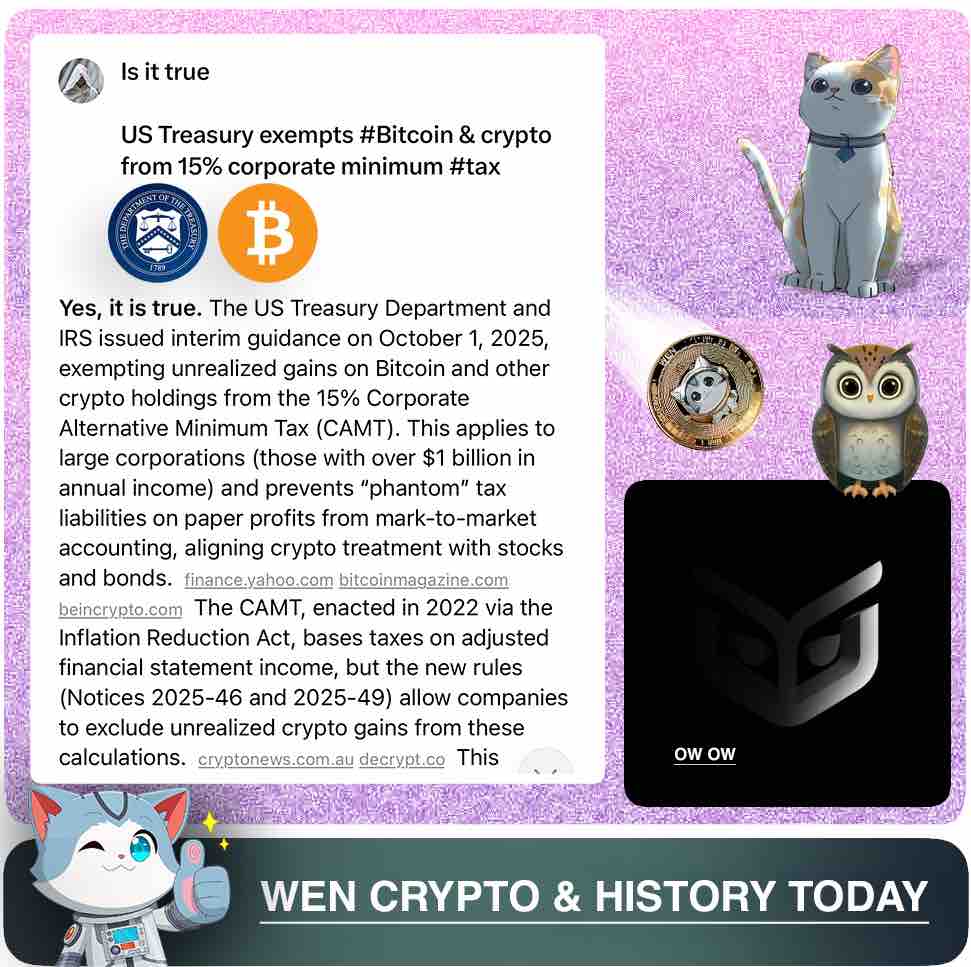
The first days of October 2025 brought two rule changes in the United States that shaped the rest of the year: the SEC cleared the path for crypto ETFs to list without one-by-one rule filings, and the Treasury and IRS changed how large companies count paper gains on digital assets. The original blog shared them as headlines, next to a weekly market report about WEN. This post records both — the rules checked and explained, and the week's on-chain numbers turned into a short guide to reading them honestly.
The SEC and the 19b-4 filings
Until September 2025, every new crypto exchange-traded fund needed two filings: an S-1 describing the fund, and a 19b-4 asking the SEC to change an exchange's rules so it could list that fund. In mid-September 2025 the SEC approved generic listing standards for commodity-based products, including crypto. On September 29, 2025, it asked issuers of proposed ETFs for SOL, XRP, LTC, ADA and DOGE to withdraw their 19b-4 filings, which were no longer needed — only the S-1 remained (FXStreet report).
In plain words: crypto funds stopped being handled as exceptions and started being handled by a standard procedure. Analysts at the time said approvals could come quickly, while noting that no timeline was guaranteed.
The tax note: what it really said
The headline that went around — "U.S. Treasury exempts Bitcoin and crypto from the 15% corporate minimum tax" — was louder than the rule. What happened: on September 30, 2025 the IRS released Notice 2025-49, interim guidance for the Corporate Alternative Minimum Tax (CAMT), a 15% minimum tax on very large companies' book income. It lets these companies elect to leave out unrealized gains and losses on certain assets measured at fair value — which can include digital assets — when computing that income (Vedder Price summary).
- It concerns very large corporations, not individuals.
- It removes tax on paper gains under this one regime; it is not a general exemption for crypto.
- It is elective and interim, pending final regulations.
What happened next
The standard procedure worked as described: within weeks, Solana funds began trading — in Hong Kong and on the New York Stock Exchange in late October 2025. The full story is in BSOL on Wall Street.
Wen that week
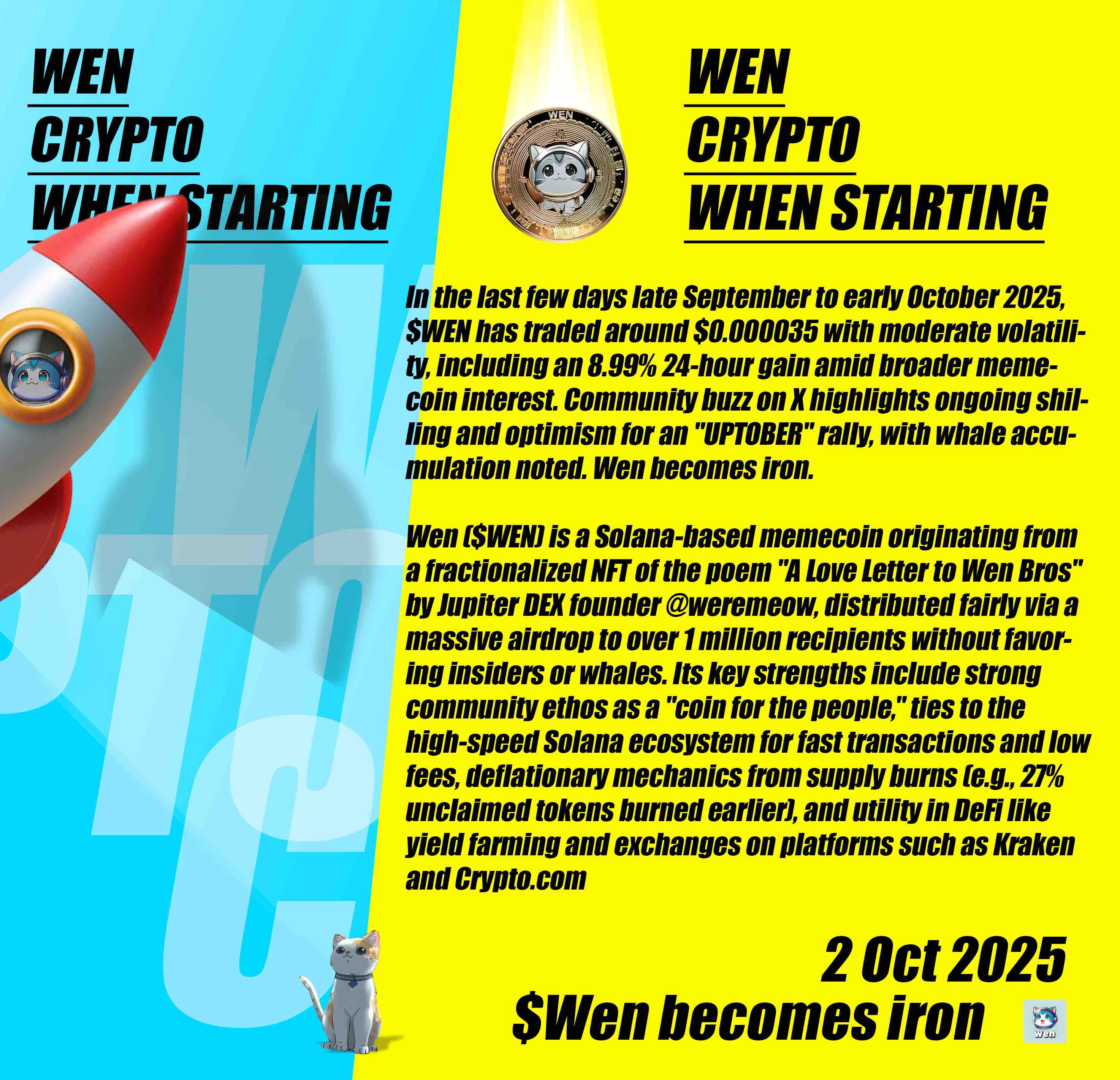
The original closed with a community slogan, "Wen becomes iron", and a short profile of WEN: a Solana token born from Meow's poem "A Love Letter to Wen Bros", fractionalized and airdropped to more than a million wallets without favouring insiders. That profile holds. So does the burn it mentioned: when the claim window closed on January 29, 2024, more than 271 billion unclaimed WEN — over 27% of the total supply — were burned for good (Decrypt). Trading venues were removed (we do not promote exchanges), and so were price figures.
Part two: reading the week's on-chain numbers
The same days produced a second community post: a weekly market report with prices, averages and "whales". We kept one short excerpt as a record of that week and replaced the rest with what stays useful — what on-chain numbers actually measure, which ones mislead, and how the same public data serves people who never trade at all.
What was said that week
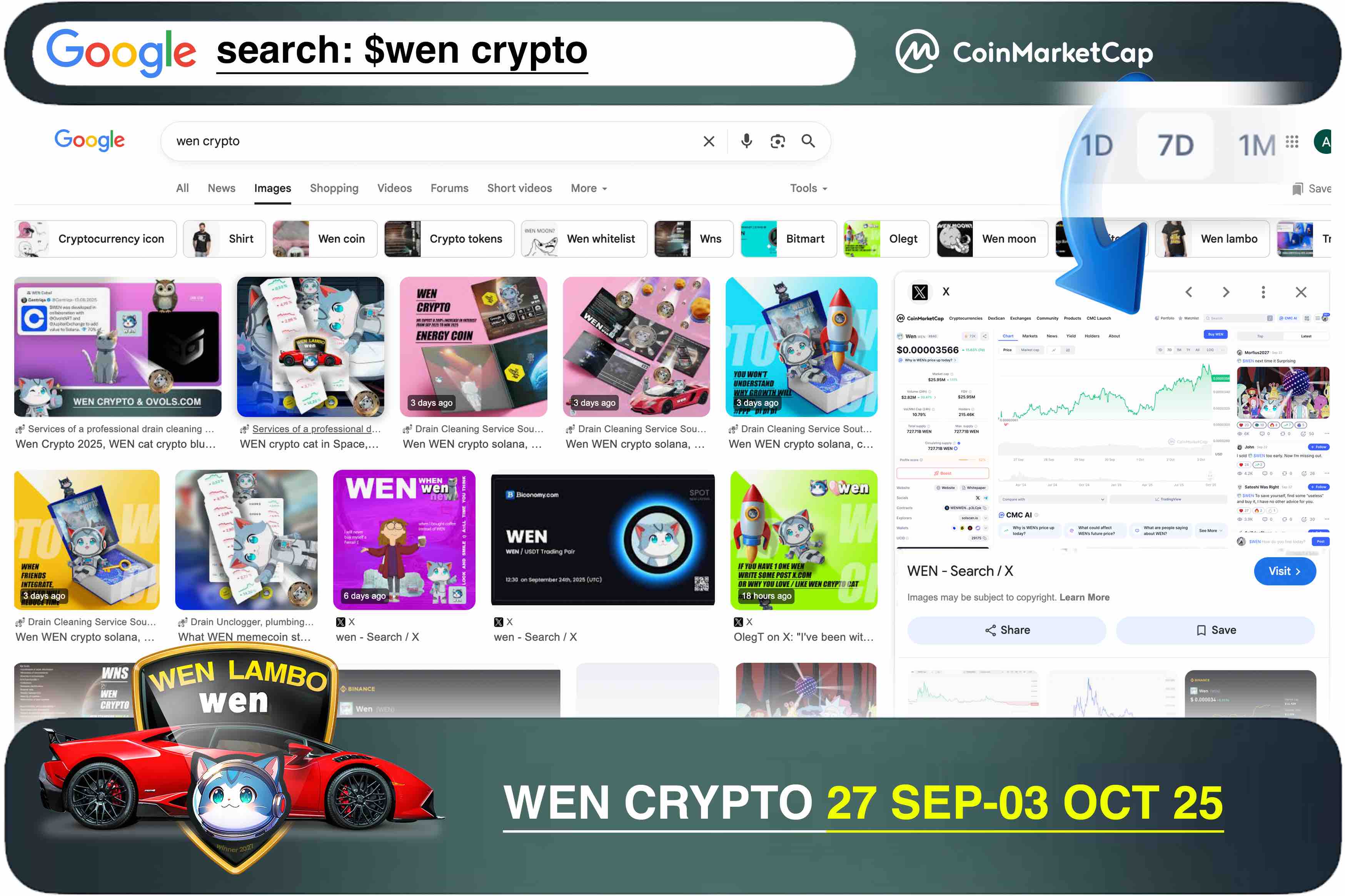
Wen exhibited growth over the past 7 days, Sep 26 – Oct 3, 2025, alongside the broader Solana ecosystem. On-chain data shows a ~25% increase in active wallets.
Community post by @OlegT39484998, October 2025 (prices removed)
The figures in the excerpt came from a community post, not from a published dataset reported. The original also quoted a Solana throughput of "1,200 TPS" — a number that depends entirely on what you count, as the next section shows.
Five on-chain numbers, explained
| Number | What it measures | What it does not tell you |
|---|---|---|
| Holders | Wallets with a non-zero balance of a token | How many people: one person can have many wallets, and an airdrop creates holders who never chose to hold |
| Active wallets | Wallets that sent or received the token in a period | Whether the activity is people or bots |
| Transactions per second (TPS) | How many transactions the network processes | On Solana, most transactions are validator votes; "user" TPS is a much smaller, different number |
| Volume | The value of a token traded in a period | Whether trades are real: the same coins can be passed back and forth |
| Concentration | How much of the supply sits in the largest wallets | Who owns them: many are exchanges, pools or programs, not individuals |
Moving averages and oscillators such as RSI, quoted in the original, are calculations on past prices. They describe what already happened; they do not know what will happen next. That is why this almanac does not publish them.
How these numbers mislead
- Short windows exaggerate. "+25% in a week" can be a few thousand wallets reacting to one post.
- Bots look like people. Automated trading and airdrop farming inflate activity counts.
- Holders are not believers. WEN reached more than a million wallets through an airdrop; many never touched it again.
- "Whale accumulation" is a guess. A big wallet buying may be an exchange moving customer funds.
For a calmer way to look at a busy chart, see how to read a market day calmly.
Check it yourself
You do not need a paid dashboard. A public block explorer shows the supply, the authorities and the largest accounts of any token. For WEN, start from the one real mint address: WEN on the Solana Explorer. Check who holds the mint authority, what the total supply is, and which of the largest accounts are programs rather than people.
The same data, used for good
Here is the useful twist: the very transparency that traders watch is what makes blockchains good public tools. A receipt written on-chain can be checked by anyone; a charity payout can be traced; a creator's royalty can be proven. That is exactly what Wen Open Lab builds on top of WNS and Token-2022 — the on-chain record as a public service, not a scoreboard.
Video
Official sources and the Wen community
- wenwencoin.com — official Wen site with the contract
- wenwencoin.com/brand — brand kit; see also our Wen Media archive
- docs.wenwencoin.com — documentation
- x.com/wenwencoin — official X account
- youtube.com/@wen-coin and TikTok — community video
- Pinterest — community art, also on our Pinterest page
- iq.wiki/wiki/wen — the wiki entry, reviewed in our IQ.wiki post
- All open Wen sources and links in one place
Check before you trust: the WEN contract
The one and only WEN mint on Solana is WENWENvqqNya429ubCdR81ZmD69brwQaaBYY6p3LCpk. Compare it character by character with the Solana Explorer and the official site wenwencoin.com. A short video shows how: find the ID contract. Names, tickers and logos can be copied; the address cannot.
Every claim on this site carries a status in our trust chain.
Keep exploring
- BSOL on Wall Street — how the ETF story ended
- Crypto eras — where 2025 fits in the timeline
- ❓ What do you know about Wen? — ten questions, with a knowledge card for every miss
- ★ Wen Open Lab — free, tested models built on WNS and Token-2022
- About the Wen token — the poem, the airdrop and the cat
- Token-2022 and WNS — the technology under the meme
Disclaimer. This is an educational almanac entry, not financial advice. It describes events and ideas; it does not recommend buying, selling or holding any token. Where a detail could not be confirmed, it is marked in the text and listed in our trust chain.
Wen Media
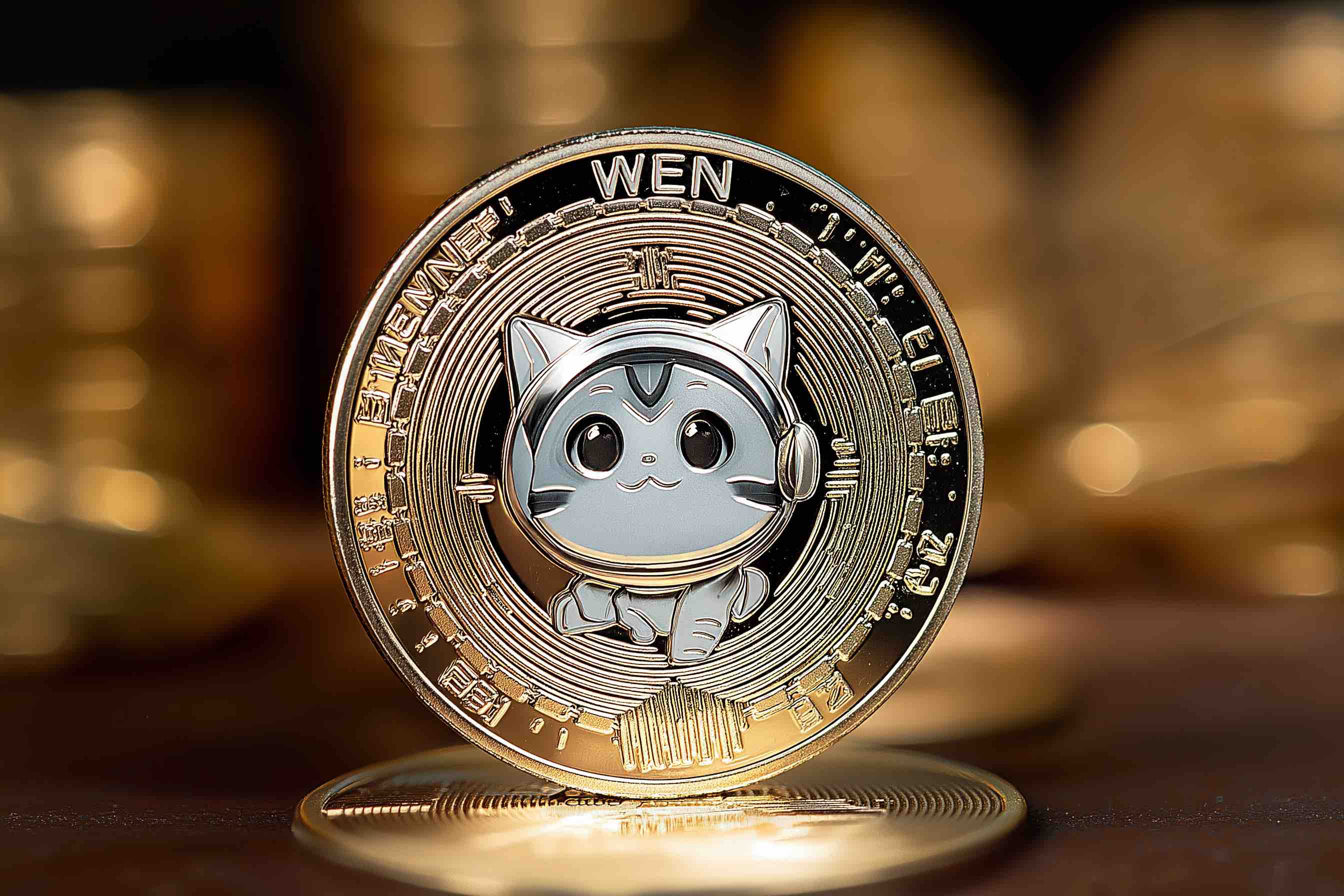
Wen cat, Wen meme and the golden Wen coin: a few picks from the community archive. Open all of Wen Media.





This page is the current, maintained version of this piece. It was first published on wen-crypto.com and has been rewritten, checked and expanded for the Wen almanac. Original page: wen-crypto.com.